Can Stock Photos Be Used for Commercial Use? A No-Fluff Guide for Small Business Owners
Here's a situation that happens more than you'd think: someone spends hours getting their website just right… then grabs a few photos from Google to tie it all together. No license check. No source. Just “vibes” and livin’ on a prayer.
Yikes.
If you've ever done this (or are currently doing this), no judgment. But let's fix it.
Because the answer to "can stock photos be used for commercial use" is yes, but only if the license actually says so. And most people skip that part entirely.
In this post, I’ll break down exactly what commercial use means, which stock photos are safe, and how to protect yourself while still creating amazing content for your brand.

What does “commercial use” mean in stock photo licensing?
Let’s start with the basics. Commercial use refers to using something (like a photo) to support a business or make a profit. That includes:
Promoting a product or service on social media
Running digital ads
Adding visuals to your website, sales pages, or landing pages
Designing marketing materials like flyers or freebies
Using graphics in your online shop listings
Even if you’re not selling something directly in the image, if it’s being used to promote or grow your business, it falls under the umbrella of commercial use.
That’s important—because not all stock images are cleared for that type of use.
Why stock photo licensing matters for your business
"I'm just a small business, nobody's coming after me."
I hear this a lot. And I get it… you're not a Fortune 500 company, you're just trying to get your newsletter out before midnight.
And the consequences of getting it wrong aren't just theoretical—I’m talkin’ takedown requests mid-launch, legal notices, forced redesigns, and occasionally fines.
Over 2.5 billion images are misused online every day, usually by people who genuinely didn't know any better.
The good news: it's completely avoidable once you know what to look for.
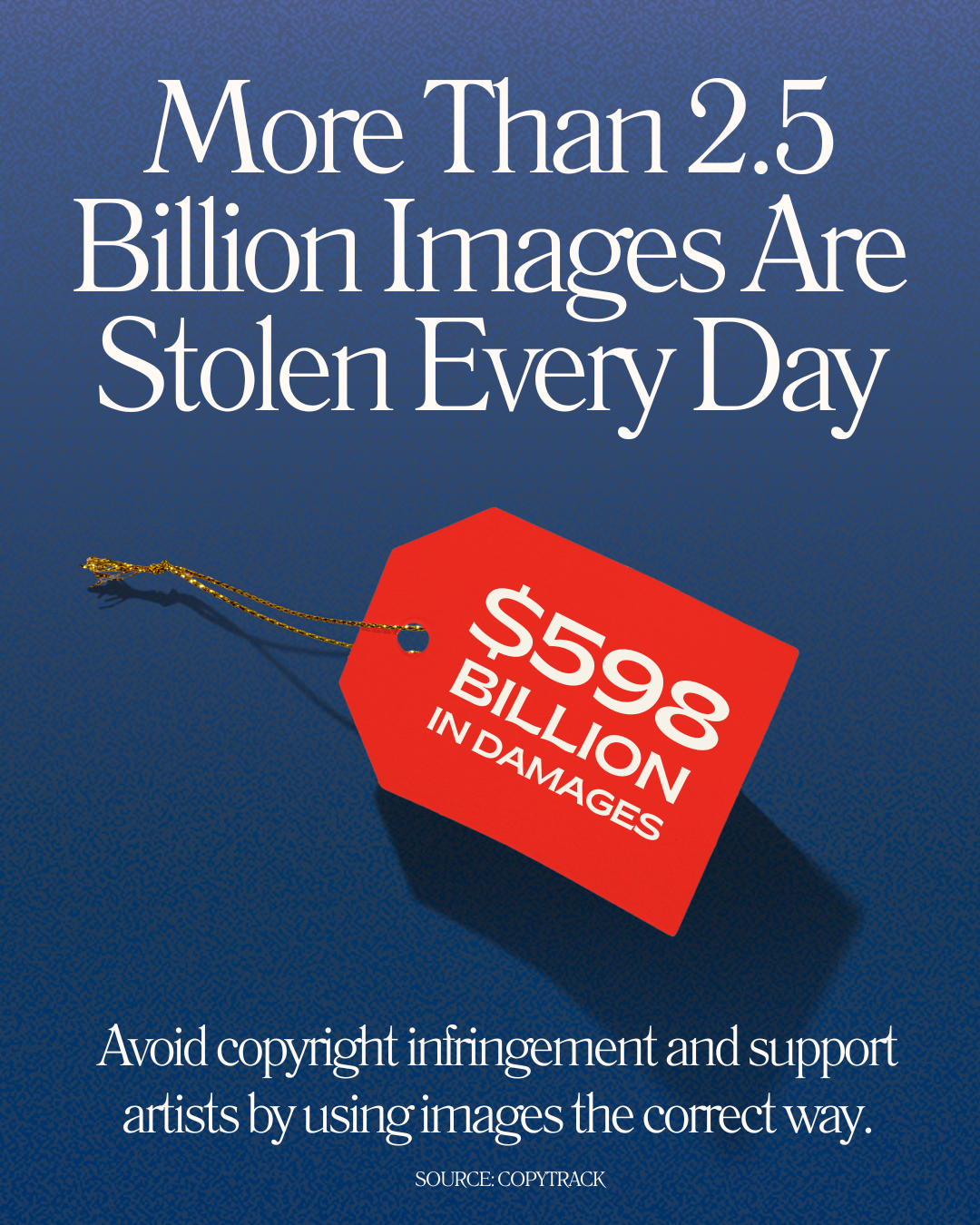
Infographic created using this template.
So, can stock photos be used for commercial use?
Yes—but only if the license says so.
"Free" and "free for commercial use" are two very different things. A photo can be free to download and still be completely off-limits for business use. The license is what tells you which one you're dealing with.
Rule of thumb: if you can't find clear commercial use language within about 30 seconds of looking, skip it. The risk isn't worth the saved time.
Free stock photo sites with commercial use licenses
Here are a few common stock photo sources and what you need to know:
Unsplash and Pexels are generally safe for commercial use, but you can't resell the images or imply that the subject endorses your brand. Good for general lifestyle visuals; not great if you need something specific to your niche.
Pixabay is similar, but watch out for third-party ads on the site—those images sometimes have different terms than the main library.
Getty and Adobe Stock have solid commercial licenses but typically require a paid plan. Worth it for agencies or larger budgets; overkill for most small businesses.
Pinterest and Google Images are not sources. Just because you can right-click and save something doesn't mean you can use it. These pull from everywhere, including images with fully restricted rights, and there's no way to verify licensing at a glance.
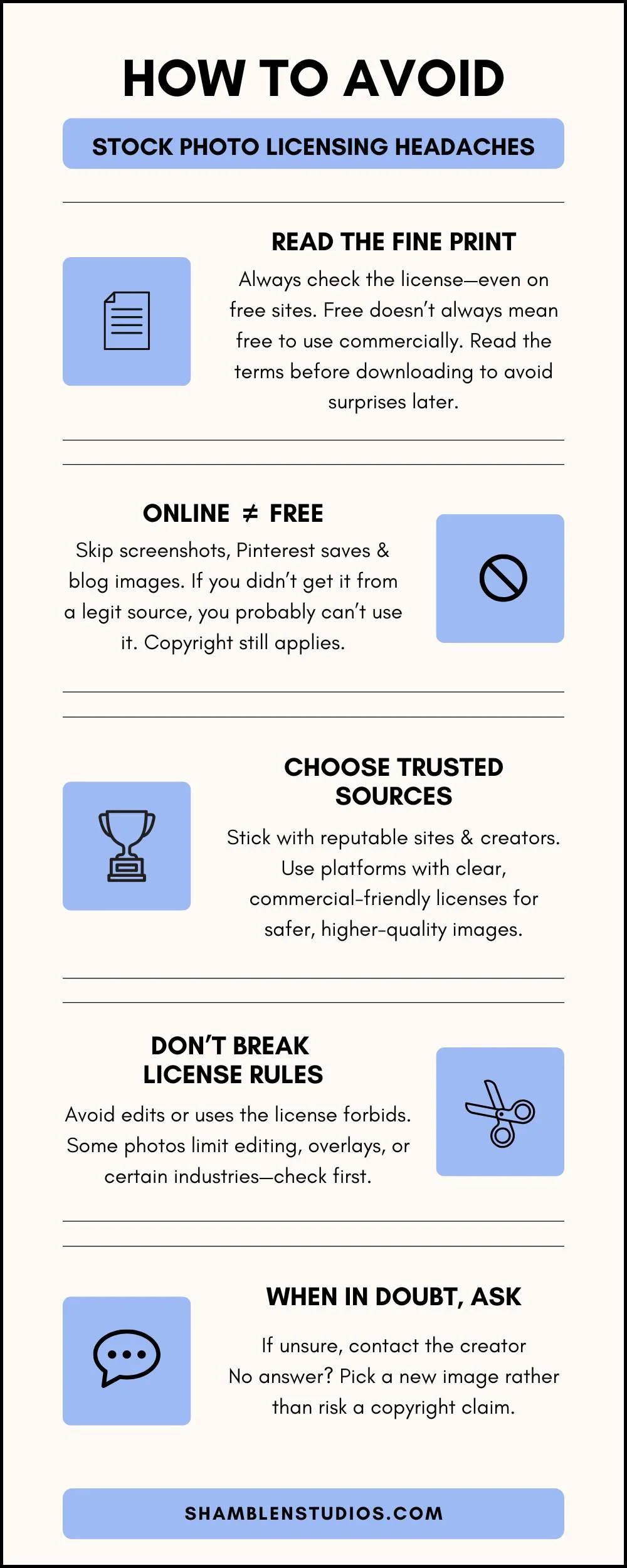
How to avoid stock photo licensing headaches
The short version: always check the license, even on free platforms. Don't use screenshots, Pinterest saves, or images you found on someone else's blog. Stick to sources with straightforward commercial terms. And if you're ever genuinely unsure… find a different image. There are enough good options out there that it's not worth the gamble.
The problem with most stock photos
When I started creating content for my clients, I'd burn an embarrassing amount of time hunting for images that were actually fun, actually on-brand, and actually cleared for commercial use. Most stock photo libraries felt like they were designed for a mid-2000s corporate brochure. Nothing popped or felt like my colorful clients.
So I did what any completely normal person would do: I built my own photo studio and started shooting everything myself.
That's how Shamblen Studios started—originally just solving my own problem, then eventually becoming a resource for small business owners who were stuck in the same scroll-through-500-beige-photos loop I was in.
Every template and image in the shop is shot and designed specifically for businesses that want to stand out, and every single one is cleared for commercial use. No fine print surprises.
Grab this template here.
What happens if you use a stock photo without a license?
This is the part nobody thinks about until it's already happening.
Use the wrong image and you might get a DMCA takedown notice, which is a terrible thing to deal with mid-launch. The photo owner can demand payment, flag your content on Instagram or Etsy, or pursue legal action. And even if it never goes that far, you're still looking at a forced redesign and time you don't have.
The annoying part is that none of it is malicious on your end. Most licensing mistakes happen because someone just didn't know. But "I didn't know" doesn't hold up as a legal defense.
Totally avoidable though! Which is the whole point of this post.
Why choose templates designed for commercial use?
If you've made it this far, you now know more about stock photo licensing than most small business owners ever bother to learn. So you're already ahead!
The next step is making sure you actually have images that are cleared, on-brand, and don't make you want to fall asleep looking at them.
If you want to start with something free, I put together a set of drag-and-drop Canva templates you can grab below… commercial use included with no fine print surprises.
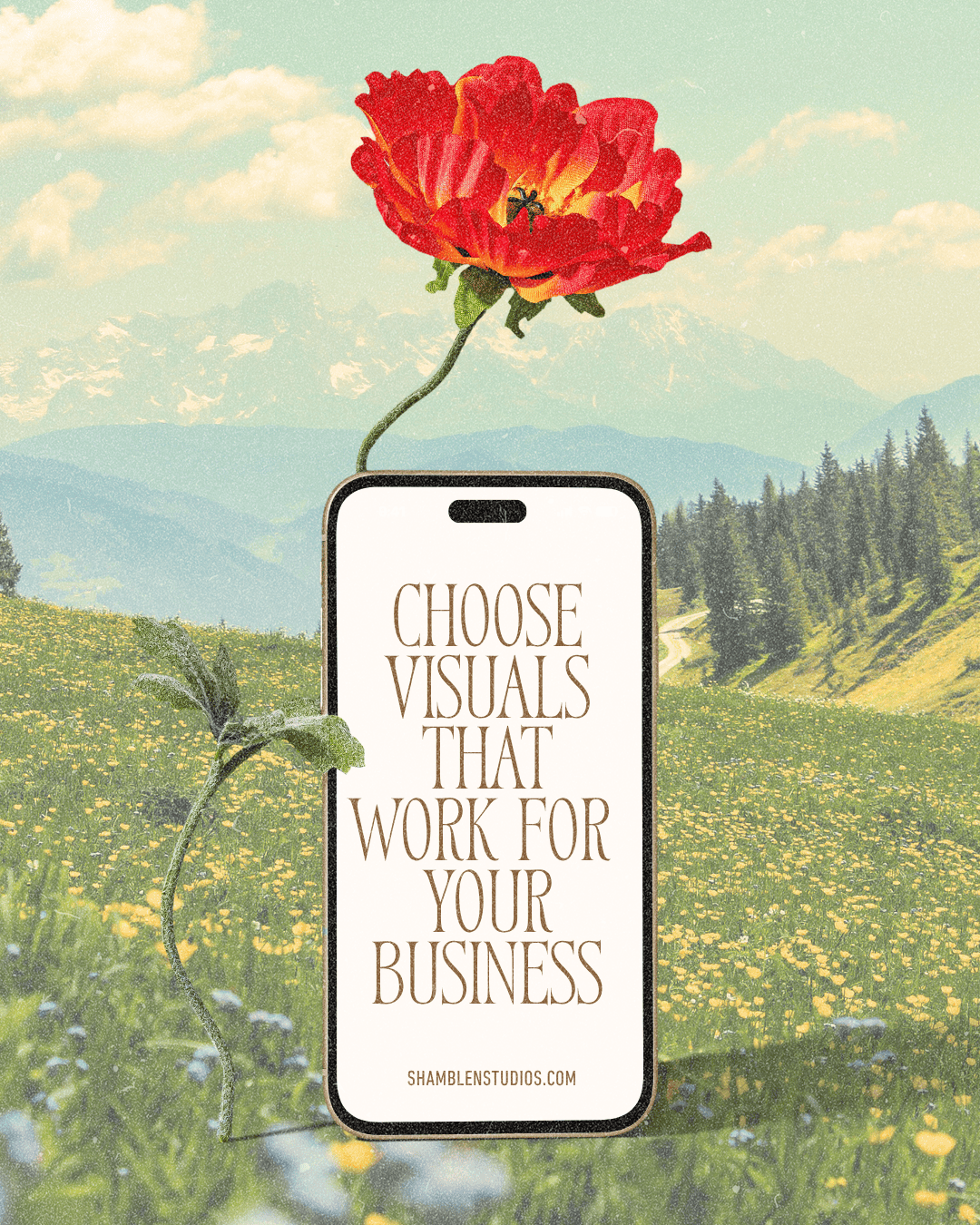
Template source here.
To wrap it up: can stock photos be used for commercial use?
Yes! But only if the license says so. Check before you use, stick to trusted sources, and when in doubt, find a different image.
Using photos the right way protects your business legally and quietly builds trust with your audience, because nothing erodes credibility faster than getting caught with borrowed visuals.
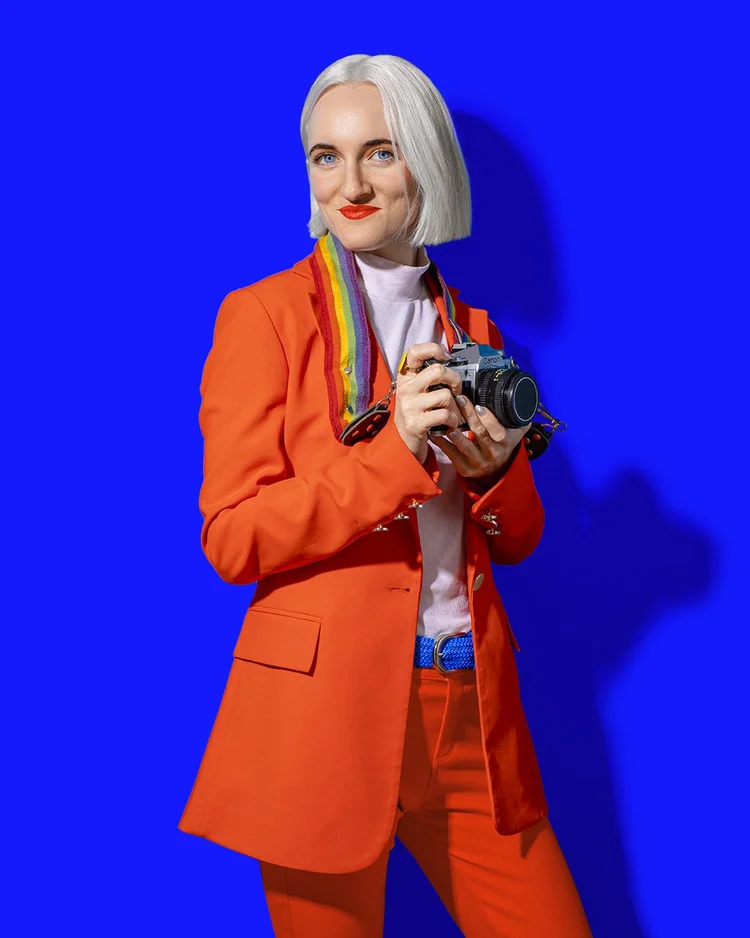
Hi, I'm Amy — the person behind this post!
I'm a creative director who's made things look good for brands like PepsiCo, Too Faced, and Dunkin'. These days I channel that into Canva templates for small business owners who have better things to do than spend three hours on a single Instagram post. If you want to try them yourself, grab 'em below!
Get the free templates →